July 4th | TAS Lecture: Durham’s Museum of Archaeology and its Collections | Gemma Lewis 7.30pm at Stockton Central Library TS18 1TU (Doors open at 7.00pm). Guests are welcome for £4 each on the door.
Durham opened its first museum in 1833, just a year after the founding of the University. The Archaeology Museum, in Palace Green Library, Durham. is the successor of this original University Museum.
In this lecture, Gemma will discuss the collections held in the Museum.revealing what was found of the earlier industrial and social history of this part of the city.
About the speaker
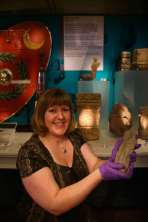
Gemma is the Deputy Curator of University College, Deputy Curator of the Castle in the Library and Curator of Durham Castle and the Museum of Archaeology in the Castle.

 excavation of the Roman villa at Woodchester, Gloucestershire, which contains the largest
  f the excavations on the scheme, including work at Cataractonium, Bainesse Cemetery and Scotch Corner.
 Helen has been an archaeological consultant since 2001.Prior to that she worked as a field archaeologist in Northampton. She studied at the University of Bradford and was involved with a research project into hunter-gatherer mobility in the Yorkshire Dales.
 Department. She later undertook an MSc in Osteology, Palaeopathology and Funerary Archaeology taught jointly between the Universities of Sheffield and Bradford. She returned to Durham to complete her PhD. Her studies became the subject of a book The Social Archaeology of Funerary Remains that she co-edited with Dr Chris Knüsel (University of Exeter).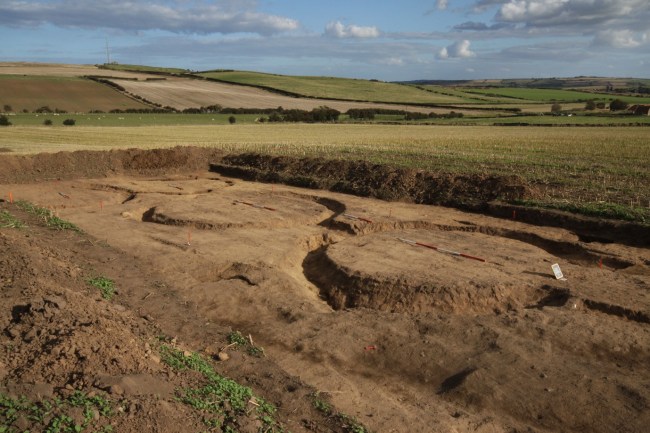

 TAS member Steve Sherlock has been a professional archaeologist for 36 years and has spent much of that time working in North East England. Much of his research has been focused on East Cleveland where he has undertaken a number of major excavations particularly on Iron Age and Anglo-Saxon sites. Commercially he has also excavated and published on later sites including medieval settlements at Castleton and Long Marston. He has been the archaeological clerk of works, working on the A1 road improvements in North Yorkshire, as well as other projects in the area. His work is published in regional journals and conference proceedings and in 2012 he published two Tees Archaeology monographs.

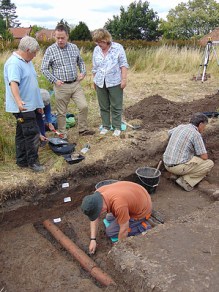 are opportunities for volunteer led archaeology to make discoveries about the past. In this talk I would like to present results of two projects from the Vale of York, south of York at Cawood and North Duffield. In both instances local history and archaeology groups have obtained funding to carry out excavations, answering questions that they have about the past in their historic landscape. In both instances the work was supported by the Heritage Lottery Fund.
 in Yorkshire based in and around York. He worked in local government housing until going to study archaeology at the University of York where he obtained a degree and a Masters in Archaeological Heritage Management. Jon completed his academic career by obtaining a doctorate at Lancaster University in 2001. Following time working as a project manager with the Archaeology Data Service at the University of York he became Community Archaeologist at York Archaeological Trust. At YAT Jon was involved with many community projects supporting local groups and involving people from all walks of life in different aspects of archaeology. Jon was also instrumental in ensuring that a volunteer team was involved with the multi million pound excavation at Hungate in central York. After 9 years with YAT Jon set up his own business, continuing to make archaeology accessible to all. In November 2015 Jon was awarded the prize as Community Archaeologist of the Year by the CBA and Marsh Christian Trust. It was Jon’s work with North Duffield and Cawood in particular that led to this award.

 growing interest in archaeology led him to undertake doctoral work in the Research Laboratory for Archaeology at Oxford. In 1995 he took up a position as lecturer at Durham University where his research has broadened to cover the chemistry of bones and teeth applied to archaeological problems, and Bayesian statistics applied to archaeology, particularly to the analysis of scientific dating techniques, and with wider applications in Quaternary science.
 Teesside Archaeological Society