April 19 |Nevern Castle in Pembrokeshire | Dr Chris Caple, Senior Lecturer in the Department of Archaeology at Durham University. 7.30pm at Stockton Central Library TS18 1TU. Guests are welcome for £4 each on the door.
Dr, Caple has a long term research interest in Welsh castles and between 1984 and 1995 he directed the archaeological excavations at Dryslwyn Castle in Dyfed. These Cadw funded excavations produced one of the most detailed excavations of a Welsh castle ever undertaken producing a wealth of environmental remains and evidence of the 1287 siege; they were published as a Society for Medieval Archaeology Monograph in 2007.
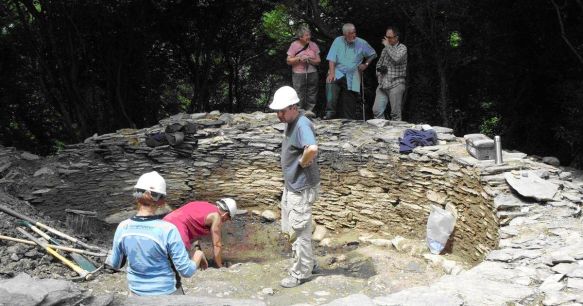
He subsequently started excavations at Nevern Castle in 2008, revealing a well preserved 12th century castle built of stone mortared with clay and unearthing a threshold containing hidden apotropaic symbols. These excavations will continue until 2018.
About the Speaker
Chris graduated from University of Wales, College of Cardiff  in 1979 with a BSc in Archaeological Conservation. He carried out his doctoral research on the composition and manufacturing technology of medieval copper alloy pins at the University of Bradford and was awarded a PhD in 1986. Between 1984 and 1988 he was the artefacts conservator at the York Castle Museum. In 1988 he became lecturer in Archaeological Conservation and Archaeological Science at the Dept. of Archaeology, University of Durham, becoming a senior lecturer in 1996. He has He has been a Fellow of the Society of Antiquaries (FSA) since 2002.
For further information, links and bibliography click here.

 growing interest in archaeology led him to undertake doctoral work in the Research Laboratory for Archaeology at Oxford. In 1995 he took up a position as lecturer at Durham University where his research has broadened to cover the chemistry of bones and teeth applied to archaeological problems, and Bayesian statistics applied to archaeology, particularly to the analysis of scientific dating techniques, and with wider applications in Quaternary science.

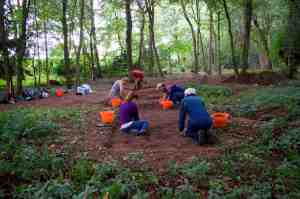 on the Jacobean and later Kiplin Hall and its grounds, located near Richmond, North Yorkshire. Set within a wider landscape of prehistoric and Roman archaeological sites, the wide sand and gravel terraces flanking the River Swale are known to host archaeological remains ranging from the Mesolithic to the present day and, prior to the building of the Hall, Kiplin was dominated by a monastic grange of the nearby Easby Abbey. Despite this, the Kiplin grounds have been subject to almost no previous archaeological investigation. What has emerged is a fascinating story of the development of the grounds as we see them today, a dynamic period of change and remodelling of the land against a backdrop of societal and industrial reform.


 Recent excavations at Binchester have revealed unexpectedly good preservation of the underlying archaeology. This lecture will provide a chance to hear about the range of exciting discoveries made during the 2014 season of work at the site.
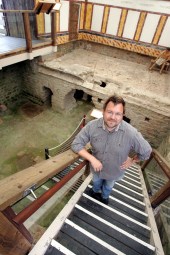 About the speaker

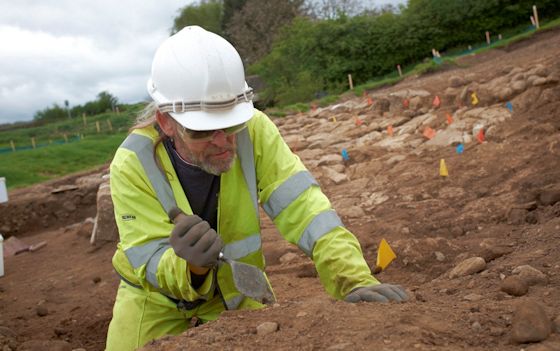 A1 Leeming to Barton Improvements
 Teesside Archaeological Society