TAS LECTURE | Reminder for Tue 30 June | The Archaeology of the A1 Dishforth to Barton Road Scheme

June 30 |The Archaeology of the A1 Dishforth to Barton Road Scheme Dr Stephen Sherlock, A1 Archaeology Clerk of Works7.30pm at Stockton Central Library TS18 1TU. Guests are welcome for £4 each on the door.

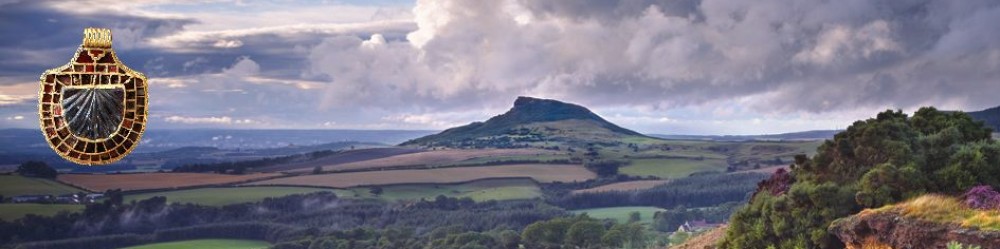
Steve’s lecture will present the archaeological results from the improvements to the A1 road through North Yorkshire, undertaken on behalf of the Highways Agency between 2009 and 2015. The size of the project—a total length of 24 miles—meant the project was split into two phases, the main site to be excavated during the work in 2009–2010 was the Roman vicus at Healam Beck.Catterick

The second programme of work commenced in late 2013 and there has been a broader range of sites—and a substantial increase in the number of artefacts. The sites range from an Early Mesolithic settlement at Little Holtby with over 4,000 flint tools found in 2014, to a burial mound of probable Bronze Age date south of Catterick. The main focus of the excavations is around Catterick, with both Iron Age settlement to the north and Iron Age burials to the south of the Roman fort and town.

The main discoveries have been around Catterick where there are two scheduled ancient monuments. Here there are traces of a Roman cemetery, fields, and metalworking around Bainesse. At Cataractonium, Dere Street has been exposed near the River Swale with Roman buildings alongside and evidence for the town defences near the river itself. The lecture will outline the work at Healam, the approaches to discovering the sites, and present the most up to date interpretations of discoveries around Catterick—although fieldwork and post-excavation analysis will be continuing through 2015.

About the speaker

Steve Sherlock has been a professional archaeologist for 35 years and has spent much of that time working in North-east England and as a TAS member. Whilst much of his research has been focused on East Cleveland, he has undertaken major excavations on Iron Age and Anglo-Saxon sites in the region.steve

Commercially, he has also excavated and published on later sites such as the medieval settlements at Castleton and Long Marston. He has been the archaeological clerk of works, working on the A1 road improvements in North Yorkshire, as well as other projects in the area. His work is published in regional journals, conference proceedings and in two Tees Archaeology monographs (2012).
TAS LECTURE | Reminder for Tue 26 May | Early Medieval Perceptions of the Past: Identity and the Prehistoric in Anglo-Saxon England

May 26 | Early Medieval Perceptions of the Past: Identity and the Prehistoric in Anglo-Saxon England | Dr Sarah Semple, Durham University. 7.30pm at Stockton Central Library TS18 1TU. Guests are welcome for £4 each on the door.

The prehistoric and Roman inhabitants of England left a rich repertoire of monuments and remains. In the post Roman aftermath, the communities that struggled to redefine themselves and their control over landscape and resources, began to creatively draw upon these physical and material legacies. The natural landscape exerted a pFigure 6.10rofound shaping effect on territory, the legacy of the prehistoric and Roman past. Barrows, enclosures, forts—as well as Roman and Romano-British places and remains—proved key to the flourishing of new communities, and the ancient and more recent monuments in the landscape were drawn upon in the creation of new stories of origins, power and descent. This presentation explores how these processes helped shape the local world view of communities and how, by the 6th and 7th centuries, emerging elite and royal power began to exploit and harness ancient monuments and the landscape for their own, new ambitious vision of power.

About the speaker

Sarah’s research focuses on the early medieval period in Britain and Northern Europe. She is especially interested in understanding early medieval interaction with the natural and man-made environment with particular reference to the role of landscape in definitions of identity, religion and cult practice, as well as charting the ideological and political uses of natural topography and ancient remains.

Figure 3.3Recent publications include: Anglo-Saxon Perceptions of the Prehistoric. Ritual, Religion and Rulership (2013) and Signals of Belief in Anglo-saxon England (2010). She recently completed a collaborative project exploring the important monastic sites of Wearmouth and Jarrow. Further regional involvements include field investigation at Yeavering, Northumberland, Sockburn, County Durham and at Etal on the Northumberland border.

TAS LECTURE | Reminder for Tue 21 April | The Creation of an Estate: Archaeological Investigations at Kiplin Hall, North Yorkshire

April 21 |The Creation of an Estate: Archaeological Investigations at Kiplin Hall, North Yorkshire | Jim Brightman, Solstice Heritage 7.30pm at Stockton Central Library TS18 1TU. Guests are welcome for £4 each on the door.

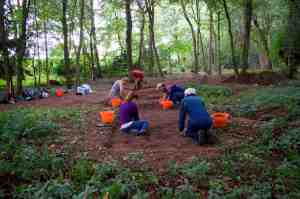
The ‘Charting Chipeling’ project was a volunteer archaeology project, funded by the Heritage Lottery Fund, and focusing cDSC_0786on the Jacobean and later Kiplin Hall and its grounds, located near Richmond, North Yorkshire. Set within a wider landscape of prehistoric and Roman archaeological sites, the wide sand and gravel terraces flanking the River Swale are known to host archaeological remains ranging from the Mesolithic to the present day and, prior to the building of the Hall, Kiplin was dominated by a monastic grange of the nearby Easby Abbey. Despite this, the Kiplin grounds have been subject to almost no previous archaeological investigation. What has emerged is a fascinating story of the development of the grounds as we see them today, a dynamic period of change and remodelling of the land against a backdrop of societal and industrial reform.

About the speaker

Jim Brightman, Director of Solstice Heritage, is a professional archaeologist and heritage consultant with over a decade of experience in undertaking and supervising planning-led archaeology, research and conservation, and community-based projects. Jim’s wide-ranging experience has included working on urban and rural sites of all kinds, and examining archaeological remains from Mesolithic hunter-gatherers to late Victorian slum housing.

In the early 2000s Jim completed a BA and MLitt in archaeology at Newcastle University during which he developed his passion for the archaeology of northern England which had been first kindled by the castles and abbeys of North Yorkshire as a child. Outside archaeology Jim is a keen musician and hillwalker, and can also be found dangling from rock faces around the north of England. Jim is a fully accredited member of the Chartered Institute for Archaeologists (MCIfA).

TAS LECTURE | Reminder for Tue 31 March | Crowd-funding and Crowd-sourcing in Today’s Archaeology: Lisa Westcott Wilkins & Brendon Wilkins

March 31 | How Far from the Madding Crowd? Crowd-funding and Crowd-sourcing in Today’s Archaeology | ,DigVentures 7.30pm at Stockton Central Library TS18 1TU. Guests are welcome for £4 each on the door.

Numerous community archaeology projects are undertaken every year in the UK on a wide range of sites by a variety of public, private and third sector organisations. Building on this provision, a new social, digital and collaborative economy is also emerging, creating an access step-change that has made it radically easier for communities to form. The emerging field of digital public archaeology has struggled to adequately theorise these new developments, assuming that all community archaeology projects can be simplified into one of two overarching methodological orientations: ‘top down’ or ‘bottom up’. In the former, projects can be conceived as a stage-managed collaboration between expert and public, with the expert retaining control over design, fieldwork and analysis. In the latter, the agenda is set according to the needs of communities themselves, with the expert relinquishing control of the process into the hands of non-professionals.

Drawing on our ‘Digital Dig Team’ innovation, this presentation will consider new approaches that enable archaeologists to co-fund, co-design, co-deliver and co-create value with their respective communities—innovations that make no sense in terms of top down or bottom up, and demand a rethink of community-based models that rely on economic theory. The digital and collaborative economy is more akin to an ecological system, where socially embedded technologies (often bracketed under the term ‘citizen science’) present archaeologists with a multitude of opportunities to do things radically differently. They open new vistas for archaeological knowledge creation, ultimately realising the value of research through a truly social method.

ABOUT THE SPEAKERS

TAS

Lisa is Managing Director and Brendon is Projects Director at DigVentures, a social business at the forefront of culture, technology and entrepreneurship, committed to raising seed capital and increasing participation for sustainable archaeology and heritage projects worldwide.
Their innovative model works to connect heritage sector managers and archaeologists with a worldwide crowd of interested and actively engaged participants, creating a platform for the public to financially support interesting projects as well as to join in, learn new skills and contribute to internationally important research. As a Chartered Institute for Archaeologists Registered Organisation (RO) and the first-ever CIfA Accredited Field School, their work and opportunities are quality-assured at the top of the industry standard.
Over the last two years DigVentures has raised over £65K in seed funding from a globally networked crowd of supporters—money that has gone on to leverage four times that amount for their project partners in match funding.